Understanding how investigation works
Paranormal research is a structured examination of unexplained experiences. Methods matter as much as what is reported.
Evidence Review
Three layers of an investigation
Sound investigation keeps observation, evidence, and interpretation separate.
Observation
What was experienced or documented: a sound, a temperature change, a photograph, a witness account, an equipment reading.
Evidence
What can be supported by recordings, measurements, photographs, documentation, or other information that can be reviewed.
Interpretation
What the evidence might mean. An interpretation has to be earned. It is not the same thing as the observation.
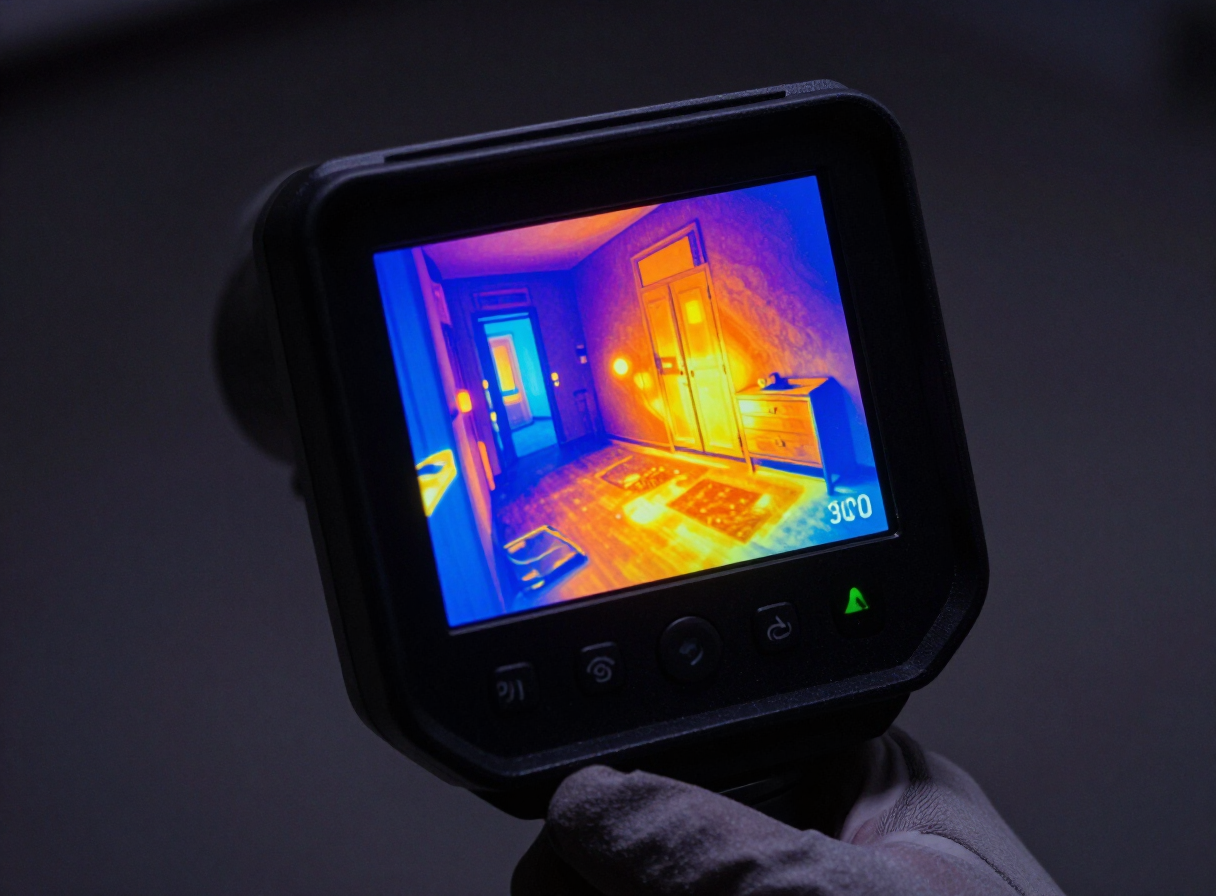
EVP, EMF, and thermal imaging
Equipment can document unusual conditions. Interpretation requires context.
Electronic voice phenomena, electromagnetic readings, and thermal images are observations. They are reviewed for ordinary sources before anyone treats them as paranormal evidence.
Research Topics
How investigation works
How Paranormal Investigations Work
A paranormal investigation is a structured examination of an unexplained experience. It combines interviews, historical research, environmental measurement, technology, and evidence review. The goal is to examine information, not manufacture a conclusion.
What an EVP Is
An electronic voice phenomenon (EVP) is a sound, often a voice, captured on a recording that was not heard at the time. EVPs are reviewed carefully. An EVP is not automatically proof of communication with the dead; ordinary explanations are always considered first.
What EMF Meters Measure
EMF meters measure electromagnetic fields. Many ordinary sources—wiring, appliances, electronics—produce electromagnetic fields. A reading is an observation to be evaluated, not proof of a spirit.
What Thermal Imaging Can and Cannot Tell Investigators
Thermal imaging displays surface temperature differences. It can reveal cold or warm spots, drafts, and structural features. A temperature change is not automatically evidence of paranormal activity.
Historical Research
Understanding the history of a location provides context for what is reported there. Records, maps, and accounts help separate what is known from what is assumed.
Environmental Explanations
Plumbing, electrical systems, structural movement, wildlife, weather, and acoustics can all produce sounds, sensations, and readings that feel unexplained. Ordinary explanations are considered before a paranormal one.
Documentation of Unusual Experiences
Careful documentation—dates, times, conditions, witnesses, and observations—allows an experience to be examined rather than simply believed or dismissed.
Evidence Evaluation
Evidence is evaluated for what it actually shows. We separate observation from interpretation and acknowledge the limits of the information.
Confirmation Bias
Confirmation bias is the tendency to notice and favor information that supports what we already believe. Recognizing it is essential to honest investigation.
Memory and Perception
Perception, memory, expectation, and fear can shape an experience. Understanding how the mind processes information helps us evaluate reports fairly.
Paranormal Investigation Ethics
Ethical investigation respects confidentiality, avoids exploiting fear, makes no unsupported claims, and is honest about what can and cannot be known.
Research Methods
Structured methods—consistent documentation, controlled observation, and careful review—help ensure that findings are trustworthy.
Unexplained Phenomena
Some experiences remain unexplained even after careful investigation. An unexplained result is honest. It does not require a paranormal conclusion.
Observation vs. Interpretation
What was observed is a fact; what it means is an interpretation. Sound investigation keeps the two separate.
Have an experience worth investigating?
Understanding what you experienced starts with careful documentation. We can help you examine it honestly.